Tourmaline on Lepidolite Cruzeiro Mine; Mina’s Gerais, Brazil Image by author

Geological Sciences | Science Communication
Tourmaline on Lepidolite Cruzeiro Mine; Mina’s Gerais, Brazil Image by author

Had a really great time presenting my research at the North-Central Geological Society of America meeting in Madison, WI today!

Here’s some lovely cross bedding in the ~1.7 Ga quartzite from Baraboo, WI!

Airplanes are great for seeing the awesome dendritic and meandering patterns of rivers ✈️
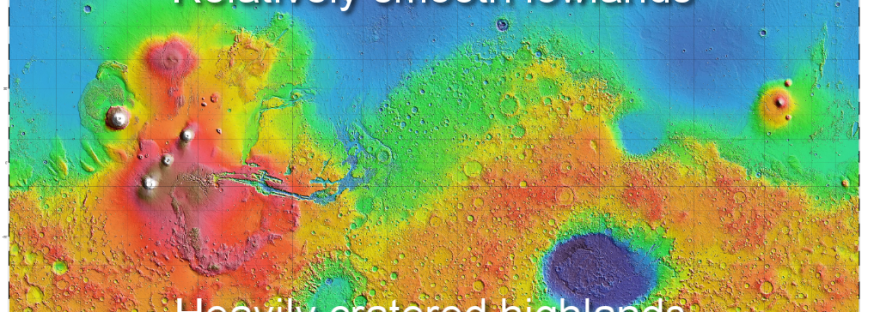
The most significant crustal feature on Mars is the hemispheric dichotomy–a physiographic divide between the southern hemisphere (heavily cratered highlands) and the northern hemisphere (relatively smooth plains). The southern highlands cover ~2/3 of Mars and are ~2–4 km higher than the northern lowlands. This area is composed of heavily cratered, relatively old geologic units mainly… Continue reading Mars | Hemispheric Dichotomy

The Thornton Quarry located near Chicago, Illinois is the site of a 420 million year old Silurian reef. The reef was formed in a shallow shelf, epicontinental sea environment, so the rocks of the quarry are filled with fossils! Many of the beds in the quarry are naturally gently tilted, and the structure has an… Continue reading Thornton Quarry, Illinois

This is the t-shirt design that I made for my school’s geology department, you gotta love the geo puns!

Also known as “peacock ore” for its vibrant rainbow hues, Bornite is a copper iron sulfide (Cu5FeS4). Specimen from Mexico Image by author

This is my pet trilobite. His name is Teddy. He’s been dead for probably around 400 million years, and I believe he’s a Devonian-aged specimen from Morocco (though I’m not entirely sure). Back when he was alive, Teddy and his other trilobite friends were among the dominant Paleozoic fauna but finally went extinct during the… Continue reading Trilobites

Mars is home to Olympus Mons (pictured above), the largest volcano in the solar system. Rising 21-24 km from the surrounding area, Olympus Mons is the dominant spot in the Tharsis region, which is the largest topographic feature on the planet. The Tharsis volcanic province covers close to 25% of the planet’s surface and houses… Continue reading Volcanism on Mars
 Emily Zawacki, Ph.D.